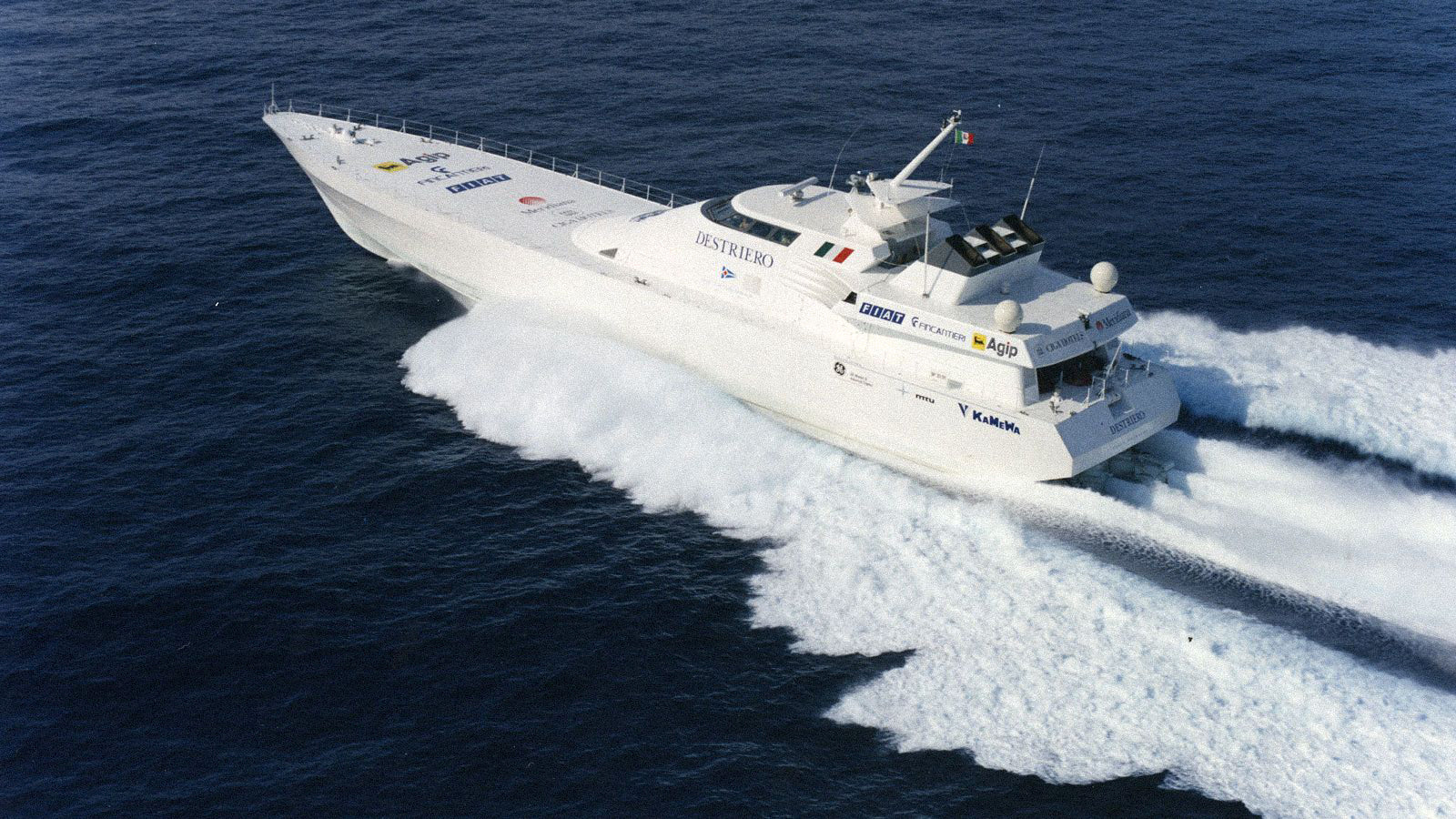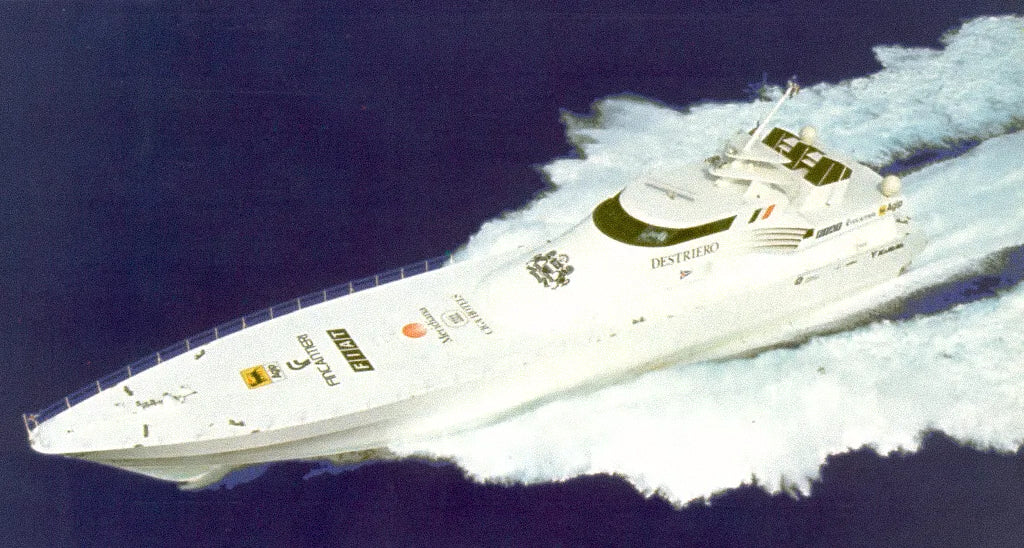
Destriero: the record nobody wanted to recognize
New York to England in 58 hours. Officially, it never happened. This is the story of the Destriero, the boat that broke an impossible record and was later denied the trophy it had been built for. In 1991, the Aga Khan IV commissioned Fincantieri for a mission with a single purpose: to create the fastest vessel ever to cross the Atlantic. They built it in under a year. What followed was one of the most extraordinary feats in 20th-century naval history, and also one of the most unjustly treated by bureaucracy.
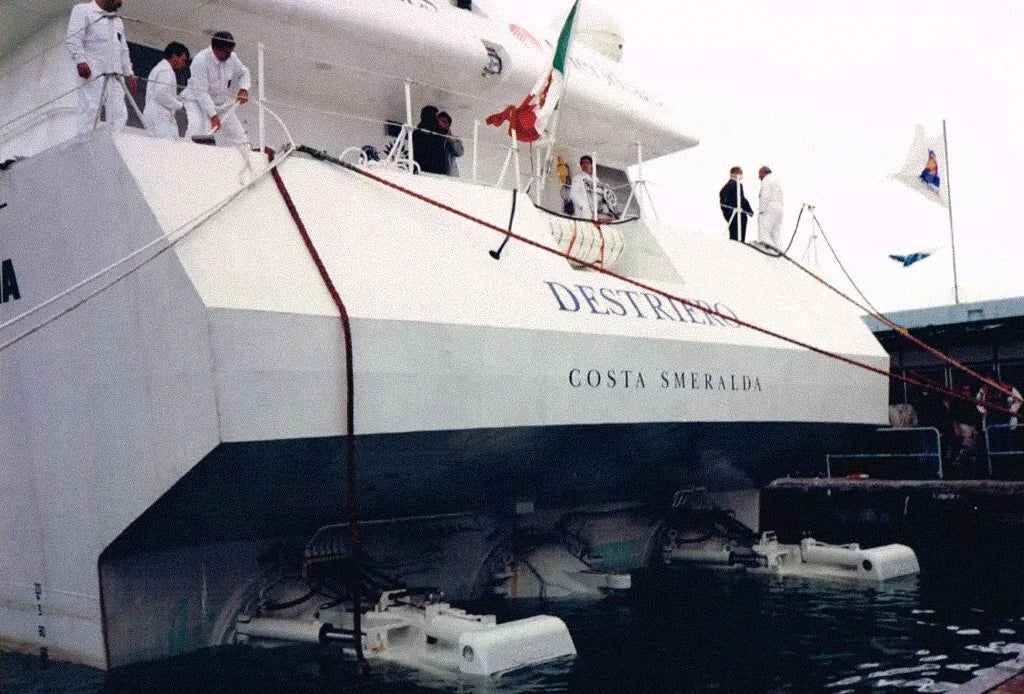
The story of the Destriero
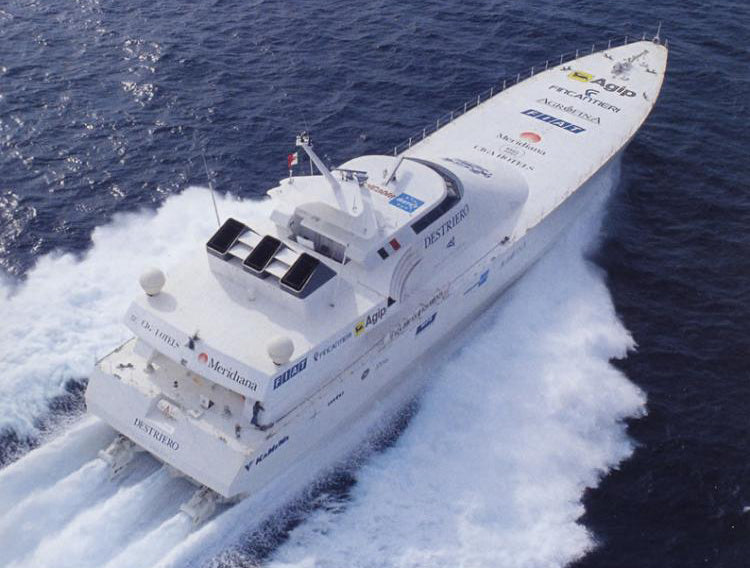
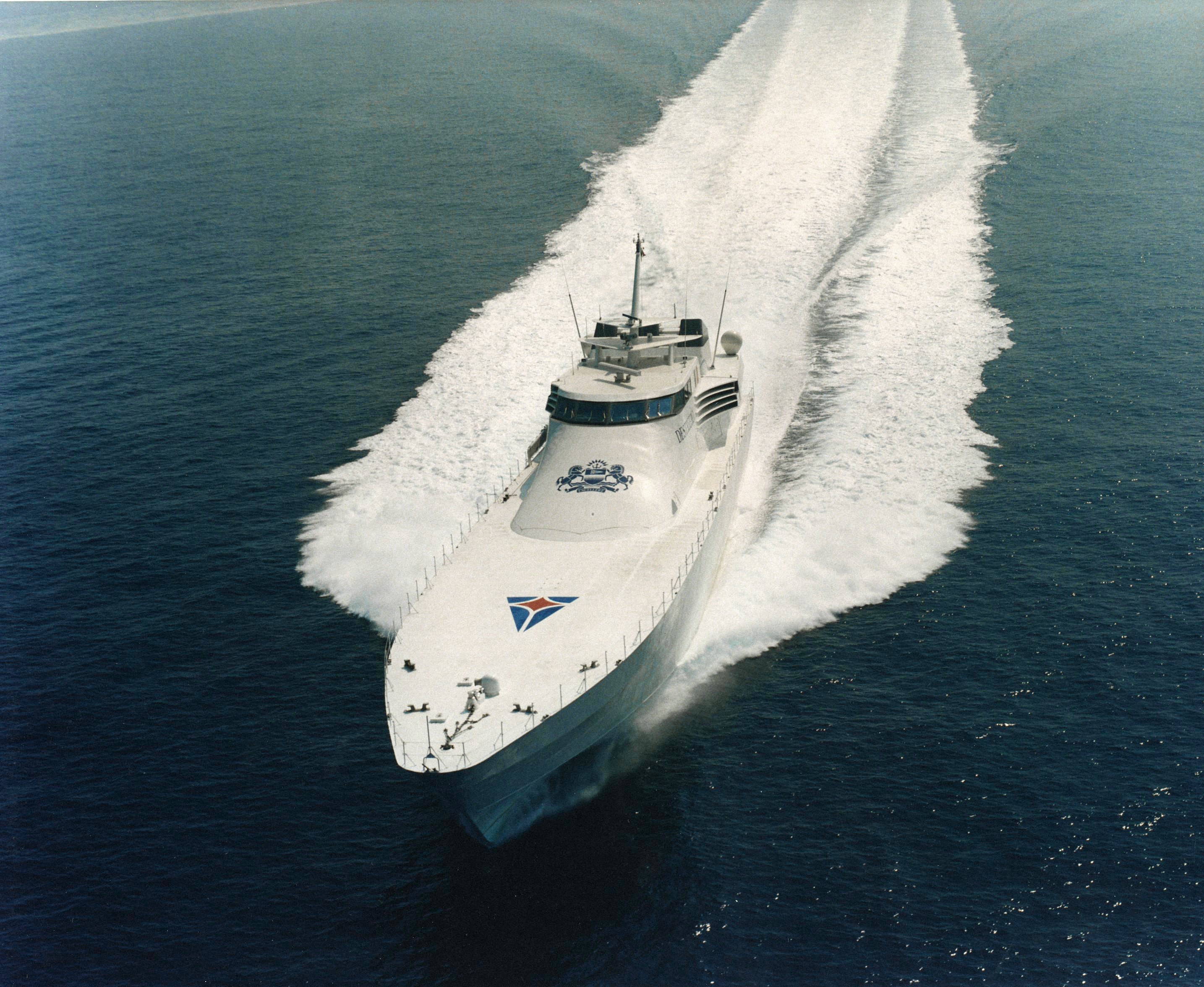
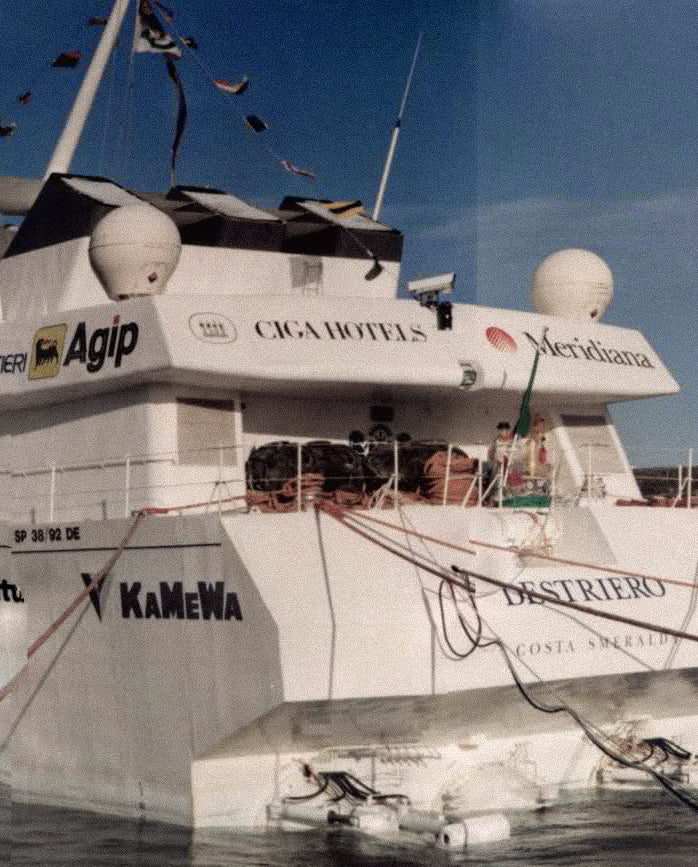
At 67 meters long and 400 tons, the Destriero was, at the time, the largest lightweight-alloy vessel ever built. It was constructed in La Spezia for a single purpose and no other function. It carried no propellers. Its propulsion came purely from water jets, which drew water in beneath the hull and expelled it at the stern at a rate of 60 cubic meters per second. It consumed nearly 10 tons of fuel an hour and covered 3,106 nautical miles without stopping even once.
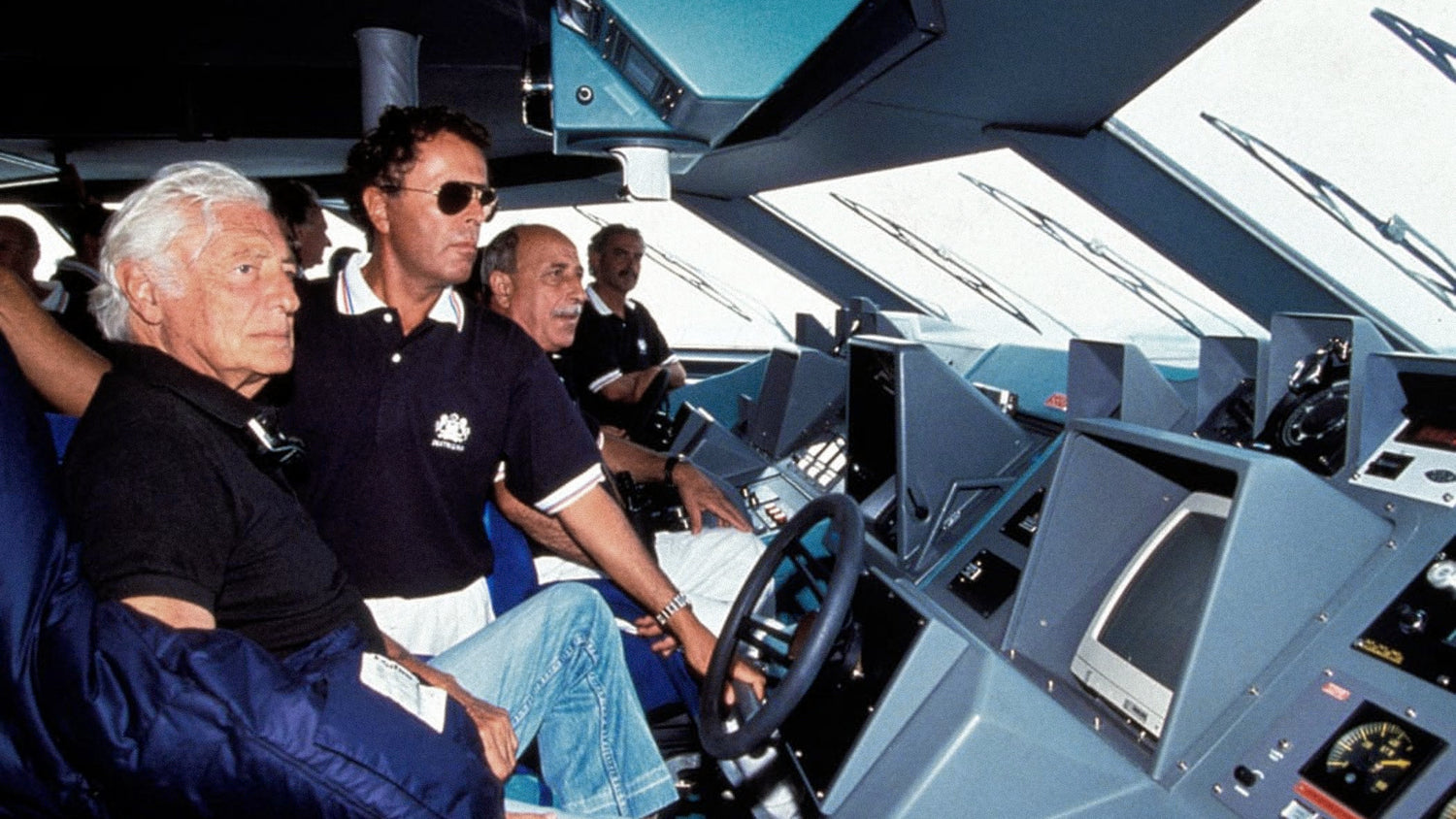
The crossing and the snub
On August 6, 1992, the Destriero set sail from the Ambrose Lighthouse, off New York. At 6:14 in the morning on August 9, it made radio contact with the Bishop Rock Lighthouse, in England's Scilly Isles. The operator's response summed up the scale of what had happened: they hadn't expected it so soon. The Destriero had averaged 53 knots across the Atlantic, arriving 21 hours faster than the previous record. Waiting at the dock was Richard Branson, the previous record holder, ready to hand over his own trophy. But the Hales Trophy committee said no: the Destriero was classified as a private yacht, not a commercial passenger vessel. The rules, written for ocean liners of another era, made no provision for a category for something so fast. It received the Virgin Atlantic Challenge Trophy and the Columbus Atlantic Trophy from the New York Yacht Club, but never the award it had been built to win.
Style, engineering, and the spirit of the Aga Khan IV
Behind every technical decision on the Destriero lay a single sensibility: that of the Aga Khan IV, for whom speed and elegance were never opposing concepts. The same exacting standard that led him to choose aviation turbines housed in an aluminum hull was reflected in the vessel's meticulously detailed interiors, and in his drive behind projects like the Yacht Club Costa Smeralda or Italy's first America's Cup challenge with the Azzurra. For him, the most radical innovation only made sense when paired with the artisanal care given to every surface, every line, every design decision.
A record the world stopped trying to beat
More than thirty years later, no yacht, no boat, nothing has managed to beat the 58 hours and 34 minutes it took the Destriero to cross the Atlantic. It won a race the world stopped running. And although the Hales Trophy never came, its story endures as a reminder that some feats don't need an official trophy to become legend: it's enough that, even today, no one has managed to repeat them.